
What Is Digital Marketing and Why Is It Important for Businesses?
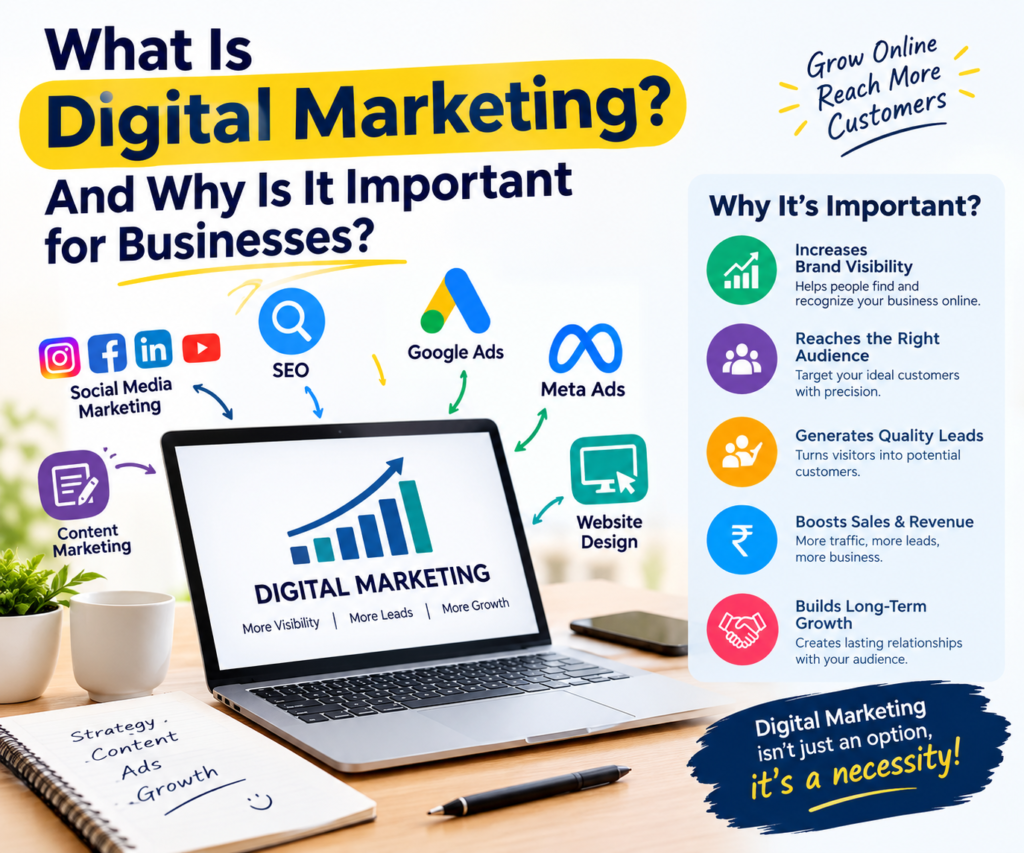
In today’s competitive world, having a business website or a physical shop is not always enough to attract new customers. Businesses also need to build an online presence, connect with their target audience, and communicate the value of their products or services. This is where digital marketing becomes important.What is digital marketing and why is it important for businesses? Digital marketing is the process of promoting products, services, and brands through online channels such as search engines, social media platforms, websites, email, and online advertisements. It helps businesses reach potential customers, build brand awareness, generate leads, and increase sales.
Whether you run a small local shop, a startup, a service-based company, or an established organization, digital marketing can help you connect with customers where they spend time online. With the right strategy, businesses can understand customer behaviour, measure campaign performance, and improve their marketing decisions.
In this guide, we will explore the meaning of digital marketing, its importance, its major types, and how businesses can use it to achieve sustainable growth.
What Is Digital Marketing?
Digital marketing refers to the promotion of products and services using digital channels and internet-based technologies. It includes activities such as search engine optimization (SEO), social media marketing, Google Ads, content marketing, email marketing, and website optimization.
Traditional marketing methods, such as newspaper advertisements, flyers, and billboards, mainly reach audiences through offline channels. Digital marketing offers additional opportunities to connect with people online, measure engagement, and adjust campaigns based on performance.
For example, a clothing store can promote its latest collection through Instagram, attract people searching for clothing through Google, and use online advertisements to reach potential buyers. Similarly, a local service provider can publish useful blog articles to attract website visitors and encourage them to request a quotation.
The main objective is not simply to get more website visitors. It is to attract the right audience and guide interested people towards a meaningful action, such as making an enquiry, booking an appointment, or purchasing a product.
Why Is Digital Marketing Important for Businesses?
Digital marketing is important because customers increasingly use online platforms to discover businesses, compare options, research products, and make purchasing decisions. A strong digital presence can help a business become more visible and accessible to potential customers.
Here are the main reasons businesses should consider investing in digital marketing.
1. Reach the Right Target Audience
One of the major advantages of digital marketing is the ability to target specific audiences. Businesses can create campaigns based on factors such as location, interests, search intent, and other available audience signals.
For example, a digital marketing freelancer serving customers in Ghatkopar can create locally relevant website content and advertising campaigns to reach businesses in that area.
Reaching a relevant audience helps businesses use their marketing resources more effectively than campaigns that target everyone without a clear strategy.
2. Increase Brand Awareness
Customers are more likely to consider a business when they can easily find useful information about it online. A professional website, active social media profiles, informative content, and consistent branding can help improve recognition.
When people repeatedly encounter helpful content from a business, they may become more familiar with its products and services.
Brand awareness does not always lead to an immediate sale. However, building familiarity and trust can help customers remember a business when they are ready to make a purchase.
3. Generate Quality Leads
Digital marketing can help businesses attract people who are already interested in their services or products.
Search engine optimization can attract people searching for relevant information. Google Ads can reach users searching for specific services, while social media advertising can introduce an offer to a suitable audience.
Businesses can then direct interested users to a landing page, enquiry form, phone number, or messaging channel.
The key is to focus on lead quality, not just the total number of enquiries. A smaller number of relevant enquiries may be more valuable than a large number of people who are unlikely to become customers.
4. Promote Products and Services Cost-Effectively
Digital marketing offers different approaches for businesses with different budgets.
For example, a business can start by publishing useful social media posts, improving its website content, and creating an SEO strategy. It can also invest in paid advertising when it has a clear objective and a suitable budget.
The cost of digital marketing depends on the channels used, competition, campaign complexity, and business goals. Paid advertising requires a budget, while organic marketing requires consistent effort and time.
Businesses should compare the costs of their marketing activities with the results they generate rather than assuming that every digital channel is inexpensive.
5. Measure Marketing Performance
Traditional advertising can make it difficult to determine exactly how many people became customers because of a particular advertisement. Digital marketing provides more opportunities to measure campaign performance.
Depending on the tools used, businesses can monitor:
- Website visitors and traffic sources.
- Advertisement clicks and impressions.
- Enquiries and form submissions.
- Conversion rates and cost per lead.
- Online sales and campaign revenue.
These insights help businesses identify which marketing activities are working and which need improvement.
For example, if a campaign receives many clicks but generates very few enquiries, the business may need to improve its landing page, targeting, offer, or message.
6. Build Trust and Credibility
Customers often research a business before contacting it. They may visit its website, read informative articles, explore social media content, or look for genuine customer reviews.
A professional online presence helps businesses answer common questions and explain what makes their services valuable.
Businesses can strengthen credibility by sharing accurate information, displaying genuine testimonials with permission, providing clear contact details, and publishing helpful educational content.
Trust develops through consistent and reliable experiences, not through promotional claims alone.
7. Compete With Larger Businesses
Small businesses can use digital channels to reach relevant audiences without needing the same marketing infrastructure as large companies.
For instance, a local bakery can create a website, publish location-specific information, share product photos on social media, and promote seasonal offers online.
A well-planned digital strategy helps smaller businesses compete for attention in their market. However, results depend on factors such as competition, service quality, budget, and the usefulness of the marketing strategy.
What Are the Main Types of Digital Marketing?
Digital marketing includes several channels. Each one serves a different purpose, and businesses can combine them to support their goals.
1. Search Engine Optimization (SEO)
Search engine optimization is the process of improving a website so search engines can understand its content and users can discover relevant pages through organic search results.
SEO involves keyword research, useful content, website structure, internal linking, technical improvements, and earning relevant links from other websites.
For example, a business offering website design services can create a detailed page explaining its services, process, pricing factors, and customer benefits.
A useful SEO strategy helps businesses attract people who are actively searching for relevant information or solutions. However, SEO takes time, and no professional can guarantee a specific Google ranking.
2. Social Media Marketing
Social media marketing uses platforms such as Instagram, Facebook, LinkedIn, and YouTube to communicate with audiences and promote a business.
Businesses can share educational posts, short videos, product demonstrations, customer stories, and announcements.
For example, a fitness studio can publish exercise tips and class updates, while a clothing brand can showcase new collections and styling ideas.
Successful social media marketing requires relevant content, consistent communication, and a clear understanding of the audience. Simply posting every day does not guarantee engagement or sales.
3. Google Ads
Google Ads allows businesses to run paid advertising campaigns across eligible Google advertising placements.
Search campaigns can help businesses reach people searching for specific products or services. Other campaign types may support goals such as awareness, website visits, or conversions.
For example, a person searching for website design services may see a relevant advertisement from a web design company.
To improve performance, businesses should select suitable keywords, write clear advertisements, create relevant landing pages, and measure conversions.
Advertising results depend on competition, targeting, budget, campaign setup, and the quality of the offer.
4. Meta Ads
Meta Ads are paid advertising campaigns that can run across eligible placements on platforms such as Facebook and Instagram.
Businesses can use these campaigns to introduce their products, promote offers, reach potential customers, and encourage enquiries.
For example, a local salon can promote a service package to an appropriate audience in its service area.
Effective campaigns require suitable creative content, relevant audience selection, a clear offer, and ongoing performance analysis. Businesses should also follow the applicable advertising and privacy policies.
5. Content Marketing
Content marketing involves creating useful information that helps an audience understand a topic, solve a problem, or make a decision.
Common formats include blog articles, videos, guides, infographics, case studies, and educational social media posts.
For example, a digital marketing professional could publish an article explaining how small businesses can improve their website traffic or generate more qualified leads.
Useful content can support SEO, build credibility, and help customers understand a service before contacting a business.
The focus should be on answering real customer questions rather than publishing articles solely to repeat keywords.
6. Email Marketing
Email marketing allows businesses to communicate with people who have chosen to receive their emails.
Companies can use email to share product updates, educational resources, offers, newsletters, and useful follow-up information.
For example, an online store may send a product update to subscribers who have agreed to receive marketing emails.
Effective email marketing depends on relevant messages, appropriate timing, audience consent, and clear unsubscribe options.
7. Website Design and Optimization
A website often serves as the central destination for a business’s digital marketing activities. It provides information about products, services, pricing, contact details, and the next steps customers can take.
A good website should be easy to navigate, work well on mobile devices, load efficiently, and clearly explain the business’s value.
For example, a service business should make it easy for visitors to understand its services and submit an enquiry without unnecessary steps.
A website that attracts visitors but fails to communicate clearly may struggle to convert those visitors into customers.
How Does Digital Marketing Help Small Businesses Grow?
Small businesses often need to make careful decisions about where to spend their time and money. Digital marketing can support growth when the strategy is matched to the business’s objectives.
Consider a local home cleaning service. Its marketing plan might include a website with clear service information, helpful local SEO content, genuine customer testimonials, and a Google Ads campaign targeting relevant searches.
Social media content can demonstrate the service process, while a simple enquiry form can help potential customers request a quotation.
The business can then measure how many enquiries come from each channel and identify which sources generate suitable customers.
This approach creates a practical feedback loop: attract potential customers, answer their questions, make it easy to enquire, and improve the strategy based on results.
Example: A Simple Digital Marketing Strategy
A small business could organize its first three months of marketing around the following priorities.
Month 1: Build the foundation
- Create or improve the business website.
- Identify the target audience and its common questions.
- Set up suitable analytics and conversion tracking.
- Optimize essential service pages.
Month 2: Increase visibility
- Publish useful blog articles.
- Improve relevant social media profiles.
- Develop local SEO content where appropriate.
- Test a small paid campaign if the budget allows.
Month 3: Measure and improve
- Review traffic, enquiries, and conversions.
- Identify the best-performing content and campaigns.
- Improve pages that attract visitors but generate few enquiries.
- Adjust spending based on business results.
This is an illustrative plan, not a guaranteed timeline for achieving particular rankings or sales.
Digital Marketing vs Traditional Marketing
Both digital and traditional marketing can help businesses reach customers. The right choice depends on the audience, objective, budget, and type of product or service.
| Factor | Digital marketing | Traditional marketing |
|---|---|---|
| Channels | Websites, search engines, social media, email | Newspapers, flyers, radio, billboards |
| Audience | Can target specific online audiences | Often reaches audiences through broader placements |
| Measurement | Offers digital tracking and conversion measurement | Measurement may depend on surveys, codes, or other methods |
| Interaction | Can support direct online engagement | Often relies on one-way communication |
| Optimization | Campaigns and content can be adjusted using available data | Some campaigns are harder to change once published |
| Best use | Online discovery, lead generation, and measurable campaigns | Local awareness and audiences reached through offline channels |
Businesses do not always need to choose only one. Combining online and offline marketing may be effective when both channels support the same business goals.
Common Digital Marketing Mistakes Businesses Should Avoid
Even a well-funded campaign can perform poorly if the strategy is not suitable for the target audience.
Here are common mistakes to avoid.
1. Targeting everyone: A campaign without a clear audience may attract irrelevant visitors and enquiries.
2. Ignoring SEO: Businesses that overlook website content and search visibility may miss opportunities to reach people actively looking for their services.
3. Focusing only on followers: Social media followers can be useful, but they do not automatically translate into sales. Businesses should also monitor enquiries, conversions, and customer retention.
4. Running ads without tracking: Without suitable measurement, it becomes harder to understand which campaigns are generating meaningful results.
5. Publishing low-value content: Repetitive or generic posts may fail to answer customers’ questions. Useful, original information is more valuable than keyword repetition.
6. Neglecting the website experience: Slow, confusing, or difficult-to-use pages can create unnecessary barriers for potential customers.
7. Expecting instant results: Some paid campaigns can generate early traffic, but profitable performance is not guaranteed. SEO and audience trust often require consistent work over time.
8. Ignoring customer follow-up: Marketing does not end when someone submits an enquiry. Timely responses and a clear sales process can help turn qualified leads into customers.
How to Choose the Right Digital Marketing Strategy for Your Business
The best digital marketing strategy depends on what your business wants to achieve.
If your primary goal is to improve organic visibility, focus on SEO, useful content, and website quality. If you need to reach people searching for a service, consider Google Ads. If your products benefit from visual storytelling, social media content and Meta Ads may be suitable.
If your business relies on repeat customers, email marketing and customer relationship management may also be useful.
Before investing in any channel, answer these questions:
- Who are your ideal customers?
- What problem does your product or service solve?
- Where do potential customers search for solutions?
- What is your available marketing budget?
- What action do you want visitors to take?
- How will you measure success?
Start with a clear objective and a manageable plan. Measure results regularly and invest more in activities that demonstrate meaningful value for your business.
Frequently Asked Questions About Digital Marketing
1. What is digital marketing in simple words?
Digital marketing is the promotion of products and services through online channels such as websites, search engines, social media, email, and online advertisements. It helps businesses reach potential customers and encourage actions such as enquiries or purchases.
2. Why is digital marketing important for businesses?
Digital marketing helps businesses improve online visibility, reach relevant audiences, build brand awareness, generate leads, and measure marketing performance. Its effectiveness depends on the quality of the strategy and how well it supports business objectives.
3. Which type of digital marketing is best for beginners?
SEO, social media marketing, content marketing, and paid advertising are common starting points. The best option depends on the business’s audience, goals, budget, and available skills.
4. Is digital marketing suitable for small businesses?
Yes. Small businesses can begin with a professional website, useful content, local search optimization, and relevant social media activity. Paid advertising can be added when it supports a clear objective and fits the budget.
5. How long does digital marketing take to show results?
The timeline varies by channel. Paid campaigns can generate traffic soon after launch, but meaningful conversions may take testing and optimization. SEO may take several months or longer to produce noticeable improvements. Neither channel guarantees results within a fixed period.
6. Can digital marketing increase sales?
Digital marketing can support sales by helping businesses reach relevant audiences, communicate value, and generate enquiries. Actual sales depend on factors such as the offer, pricing, competition, customer experience, and sales process.
7. What is the difference between SEO and Google Ads?
SEO focuses on improving visibility in organic search results, while Google Ads provides paid advertising opportunities. SEO can build long-term visibility, whereas paid ads can help businesses reach eligible audiences while campaigns are running.
Conclusion: Why Every Business Should Understand Digital Marketing
Digital marketing has become an important part of business growth because it helps companies connect with customers, improve online visibility, communicate their value, and measure their marketing activities.
From SEO and content marketing to Google Ads and social media, each channel can contribute to a different business objective. The most effective approach is to understand your audience, choose suitable channels, provide useful information, and continually improve based on measurable results.
Businesses do not need to use every digital marketing channel at once. They should begin with clear goals, a practical budget, and a strategy that suits their customers.
About the author: Digital Kiran Choudhari provides best digital marketing services, including SEO, Google Ads, Meta Ads, social media marketing, content marketing, and website design. Businesses looking to strengthen their online presence can explore these services to identify an approach that suits their needs.
A strong digital presence starts with a clear strategy and consistent execution. By focusing on customer needs and measuring meaningful outcomes, businesses can build a stronger foundation for sustainable online growth.